Wednesday, 24 November 2010

Simple curried parsnip soup


Parsnips are a bit weird, they’re the paler, more floury and less attractive relative of carrots. They are nice roasted and in soups, that’s what I like them in, anyway. This is a simple parsnip soup, in my case made from a leftover parsnip.

Ingredients
1 parsnip
1 onion
1 clove garlic
1 mug water
1 mug stock
1 tsp curry paste
1 slug of cream
1 squeeze lemon

§    peel parsnip and cut into chunks
§    peel onion and cut into chunks
§    peel garlic clove
§    put chopped parsnip, onion and garlic clove into pan with water and stock
§    boil together for 10 minutes
§    add curry paste
§    cook for a minute
§    blend with hand blender to a smooth consistency
§    add a slug of cream and squeeze of lemon juice

makes 3 mugfuls or two bowlfuls

tips
if you haven’t got a hand blender cut the veg up small or crush using a masher

If you’re like me you risk burning your mouth

Slow cooked lamb shanks – cooked with red wine and a slug of balsamic

I like my onions sliced like this
This is a simple way to make the most of lamb shanks. If you don’t want a large meal, use smaller ones! Basically this is a stew, with meat on the bone and gravy with a lot of wallop and a very light tang. The carrots and onions become melt-in-the-mouth tender.


I know, there’s no picture of the finished dish. I’m going to have to cook it again soon, and will add the photos then. We were just too busy eating it to take photos!

Serve with a green salad and steamed potatoes.

a flour drenched lamb shank
Ingredients
4 large lamb shanks
plain flour
butter
olive oil
onions , thinly sliced
garlic cloves , crushed
4 large carrots
100ml balsamic vinegar
500ml red wine, full bodied
2 tbsp tomato purée
½ tsp dried mixed herbs
generous grindings of black pepper
three large pinches of salt

Heat the oven to 400F/200C/Gas Mark 6

                                                     Method
I like my carrot slices assymetrical
  • Mix flour, pepper and salt, and drench the lamb shanks with the mixture
  • Heat a thick bottomed casserole over a medium heat and add a knob of butter and olive oil
  • Add the onions and cook until soft, then scoop out
  • Put in the lamb shanks and brown all over
  • Put the onions back in the casserole with the garlic, balsamic, wine, tomato purée, herbs and season


ground pepper and salt in a shiny bowl
Cover, put in the oven and cook for 1 hour at Gas Mark 6, then reduce and cook for two hours at 300F/150C/Gas Mark 2, until the meat is almost falling off the bone
If the sauce seems too thin, remove the lamb from the casserole and keep warm and boil down the juices to thicken them
If you have fresh herbs use a sprig each of rosemary and thyme together with a bayleaf.

Tuesday, 9 November 2010

Kitty's hot fudge sundae

Yesterday Kitty decided to make hot fudge sundaes. She baked brownies, bought vanilla ice cream and wafers and ate Sunday lunch before starting on the hot fudge sauce.

I was so impressed at all the planning and really looking forward to being overfed. She didn't have a recipe, so I sent her to a favourite cook book and she was off. No butter, never mind, margarine went into the pan followed by sugar. Then milk – she seemed to think you were meant to guess the measurement and was thrilled when I passed her a measuring jug with index of measure on the outside. I don’t think she’s ever used liquids in cooking before. Then her pal spotted that she was meant to use evaporated milk – Kit said, "no problem, I’ll just boil this down a bit".

Be still my beating heart: she is my daughter. Unfortunately we didn’t have the time, faith or the will to let her attempt this miracle. Evaporated milk is very thick and I seem to remember rather delicious. In Normandy they make the only rice pudding I’ve every enjoyed, by boiling down delicious milk with rice, so that the grains of rice almost disappear. Hmm. I’ll be trying that out sometime. Back to fudge sauce.

We improvised using more cornflour in the ordinary milk, adding a spoonful of golden syrup to the sugar/butter mixture, bubbled it all up for a bit (rolling boil to those in the know). Then we added the cornflour/milk mixture bit by bit, enjoyed the volcanic style frothing, kept stirring... and it turned out lovely. There isn’t any left to photograph anyway. Everyone ate far too much.

Brownie recipe elsewhere in this blog.

Oh, it was delicious, thanks Kit. 


ps
evaporated milk isn't a miracle - it just takes about two hours and a lot of patience to make it

Monday, 1 November 2010

Best Roast Chicken

Sunday lunch is chicken. Always if my children have any say. Roast chicken, potatoes, gravy. No pudding, but maybe fruit.

Yesterday: potatoes were great, chicken, cooked by steam for a change, not up to scratch. My usual method of very fast roasting gets out all the fat. So the breast meat was moist, but the darker meat was a bit too fatty. Kind of flobby.


Best Roast Chicken

1 chicken - not a pappy one, a free range one
garlic
olive oil
pepper and salt


Preheat oven for 20m, at Gas Mark 9 or equivalent (475F/240C), and make it very hot.
Allow 15 minutes per 500g/1lb and add 15 minutes. So a 2kg/4lb bird will take an hour and a quarter.


o    Rinse chicken inside and out and dry the outside with kitchen towels.
o    Pop several cloves of garlic into the cavity of the chicken.
o    Trickle a good slug of olive oil onto the bottom of a roomy roasting tin.
o    Put chicken into the oiled roasting tin and pour some more olive oil over the bird, followed by
o    sprinkling on several good pinches of salt and generous grindings of pepper.
o    Put the chicken into the preheated oven for 15m.
o    After 15m take the bird out and baste it with the juices and sit it on one side.
o    turn the oven down to Gas Mark 7/475F/220C and cook for 15m per pound, basting and turning every 15m.
o    When the cooking time is complete you can test the bird by prodding with something sharp between the leg and the body - if the juice that comes out is red, cook a little bit more. When the juice is clear, the bird is cooked.
o    Let the cooked chicken rest for a few minutes under a covering of foil or baking parchment. This lets the meat relax and stops the delicious juices evaporating.

Carve as you like and eat with whatever you fancy. Not cake.  Yum

A friend’s mum used to like to cook her chicken standing up ‘because it looks more natural’ apparently. She must have had a large oven and not been that bothered about spatters. She propped her chicken on an improvised trivet thing. I imagine it looked like it was begging. Since then I’ve seen lots of different recipes that plonk the chicken like this, some involving cola cans. The good thing about cooking a bird in this position is that the meat will cook more evenly – inserting a can into the cavity will help it cook from the inside out as well. If you’re trying this, please open the can and wrap it carefully in foil – who knows what is used to print onto it. I’ll post a recipe once I’ve tried it out.

Maybe you like stuffing with your roast chicken. If you put it into the bird before roasting you’ll need to cook the chicken much longer, because it increases density and that means the heat takes longer to cook everything. This usually makes the meat much drier, especially the ever popular breast. That’s why people slather it in bacon, or put fat under the skin. That’s why I cook stuffing separately if I cook it, which mostly I don’t unless I am feeding the 5,000 (or Christmas).


Other chicken recipes: marinated chicken strips chicken on forty cloves of garlic flattened chicken 

Saturday, 30 October 2010

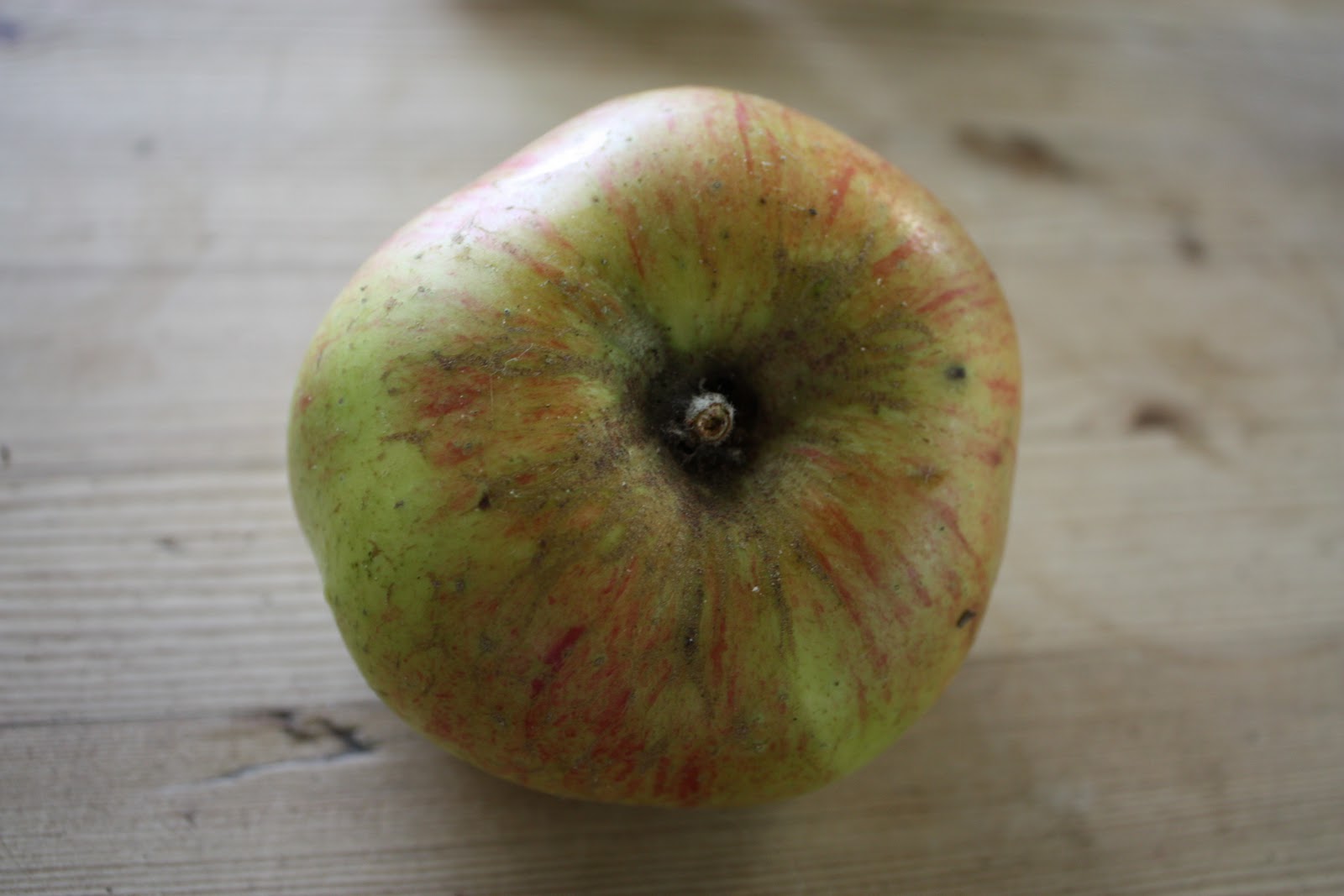
Bramleys from Wilma

 Wilma's generosity with apples has been amazing this year - most days she gives away a carrier bag full. Thank you very much.

These are Bramleys. The apple favoured by cooks for its sharp flavour and floury flesh. I made the apple tart pictured in the simple fruit tart recipe with these apples.

Sometimes you look at an apple and think it's not worth peeling. After all, who wants to find dessicated caterpillar corpses or the frass they
leave? It is just yucky. Still, the frugal soul that I am, I cut out the nasty bits and cook on. It is worth it.

Bramleys store well when they are not damaged, however without using chemicals along with dedicating a lot of time to defending the fruit tree, a lot of the apples are damaged. Sometimes it's simply from falling to the ground. Most of us don't have the time, or the head for heights, to carefully pick the fruit. So there's lots of fruit to cook at once - hence Wilma's apple distributing treks.

I think there is something rather beautiful about the fruit even if it is damaged, so I got Kit to take these photos, which show just a few of these lovely apples and the beautiful white flesh they have to offer, along with undesirable residents and blemishes.


Friday, 29 October 2010

cold day spicy biscuit with tea needed

those darker bits are especially delicious
As the leaves start to fall I start wanting to eat biscuits with my tea. I like these biscuits which have a zingy ginger bite and a warming flavour of cinnamon and cloves.

Maybe you do not like cloves? It's worth giving it a go in these biscuits - even my white-food-only daughter does. Although I'm not sure she even knows what a clove is, still she notices when I forget to put them in.

Here in rainy London cookies are creeping up apace. Back in the deprived days of my childhood had someone asked me for a cookie I wouldn't have had the first idea what they were on about. Now it's common culinary currency. So call these biscuits cookies if you like. You can cook them a bit less and have them chewy, or you can cook and cook again, making them teeth-threateningly crisp. That is the origin of the word biscuit after all - bis=twice, cuit=cooked. And don't worry, noone has lost a tooth to biting these biscuits yet.
jumped ship and ate one
 with vanilla ice cream

RECIPE

Ingredients
250g plain flour
110g unsalted butter
150g caster sugar
1 egg
1tbsp treacle
1 tsp cinnamon
half tsp bicarbonate of soda
half tsp salt (leave out if you use salted butter)
half tsp ground cloves
half tsp ginger
demerera sugar

Method
Preheat oven to 200C/gas mark 4. Line two baking trays with baking parchment, or butter them.

Sift the flour, bicarb, spices and salt if using. I actually just stir the lot around with a whisk.
Cream butter and sugar together, beating until light and creamy.
Add the egg, beating all the time.
Add treacle - don't worry if it's a bit more than a table spoonful.
Fold in flour mixture, stirring until you get a stiff dough.

Put some demerera sugar in a bowl.

Use two teaspoons if you don't want sticky hands - take a spoonful of dough and dip it into the demerera, then put it sugar side up on the baking tray.
leave room for spreading.

Bake for 15m - leave to cool before removing from the tray.

If you manage not to eat all the biscuits at once, they store well. They're also welcome as gifts.

Tuesday, 26 October 2010

flattened chicken or cooking as a dangerous sport

Why cook a flattened chicken? Well, it cooks much quicker than an unflattened one for starters. The meat is marinaded for at least two hours - but don't be put off, because the prep is straightforward and can be done the night before. Oh and it tastes delicious.

This delicious dish doesn't try to be elegant. The cooked flattened bird is slightly unwieldy and you might hesitate how to serve it - I recommend putting it into the middle of the table and letting everyone tear into it at will. It's tender enough to make it easy to get off the bone - the one I cooked on Sunday was picked clean.

Recipe

Ingredients
1 chicken
1 lemon
6 tablespoons of olive oil
handful of peppercorns
heaped teaspoonful of salt

Method
Put the chicken breast side down and use a very sharp knife or a pair of chicken shears to cut from the neck cavity right down to the tail. Turn the bird over and snip or cut the skin between the legs and wings and the breast. Lean on the legs or wings the set them open away from the breast, giving a butterfly shape. Lean on the breast bone to help flatten the bird.

Now comes the bit that can be as dangerous or not as you like. The traditional approach is to beat the chicken with a meat mallet, to tenderise the meat and flatten it out. I place the chicken on a strong tray, I put the tray on the floor, place a large strong board on top of it and I jump on it. NOTICE Please take care - it's slippery! You can just stand on the tray and wriggle, it is still slippery. You end up with a much flatter bird.

Put the bird in a large pot or roasting tin. Crush the peppercorns lightly - under the side of a broad bladed knife or using a pestle and mortar. Sprinkle crushed peppercorns and salt over the chicken, follow with the juice from one lemon and the olive oil. Rub the mixture all over the bird and leave, turning and basting every now and then. Leave for at least two hours.

Cook for 20m on a barbecue or under a pre-heated hot grill, turning from time to time and basting with the marinade.

Cooking the chicken on a barbeque gives a wonderful smoky taste. Grilling it gives a cleaner flavour. The simple marinade of lemon, olive oil, pepper and salt gives a lovely tang. In the summer it goes wonderfully with a pasta or rice salad, in the winter potatoes go well.

The only variation I'd go for is adding garlic, crushed, which is very tasty too

Monday, 25 October 2010

late lunch with friends

I dragged my pals around Hampstead Heath with the dogs before bringing them home and feeding them as much as possible. I abandoned having Sunday lunches a while ago, as it knocks out the whole day, and I don't like walking with a full stomach, it's distracting. I also like to ease into a few glasses of wine while I eat, and in the middle of the day that now just leads to one place: bed. So, I imposed my eating schedule on everyone and spent the morning having a lovely time cooking. I could have done some of it yesterday, but I didn't.

Menu
spicy houmous with coriander
tomato salad with family dressing
flattened chicken, cooked on the bbq
gratin dauphinois
simple fruit tart with creme fraiche

the kids charred marshmallows in the dying embers

I didn't take any photos, as we all just got stuck in and appreciated the spread.

Sunday, 24 October 2010

Simple fruit tart


Tart made with Wilma's Bramley apples
The pastry of this tart is buttery, crunchy, like shortbread and flavoured by an unexpected addition – alcohol. The alcohol cooks off, so eating it won’t get you drunk, other than on pleasure. I usually use tightly packed plums or apricots as the filling - but here I've used Bramley apples.

Betty’s original recipe used Calvados, which lent a hint of apple, but any strong alcohol will do. I’ve tried using rum, brandy and vodka, although I prefer something with flavour. 

Since I've run out of Calvados I used rum in this tart
This rich pastry seems to resist getting a really soggy base from the abundant fruit juices. Cook it shortly before eating if you like the base of the tart crisp, or prepare it ahead and enjoy the slightly soaked-in flavour. Of course, it’s delicious either way.


Recipe
for two 8"/20cm tarts


For the pastry:
500g plain flour
300g unsalted butter
100g castor sugar
2 egg yolks
1 coffee cup of strong alcohol


For the filling - per tart
two tins of apricots
or
1kg/2lb+ of fresh fruit, stoned or peeled and cored 
 I usually use tightly packed plums or apricots as the filling - but you can use apples or pears


Method

  • cream butter and sugar together
  • add egg yolk, beat in until combined
  • slowly add alcohol, beating all the time - if it happens to start to separate add a spoonful of flour
  • add in sifted flour a little at a time
  • if the mixture becomes slightly dry add water to combine into a ball
  • allow mixture to sit for at least an hour - best in a plastic bag in the fridge
  • roll out half the pastry and line well buttered tart tin - if it cracks patch with scraps
  • crimp the edge with your fingers and trim of surplus - I like a nice fat edge
  • pack fruit in tightly - fresh fruit is great, but you can also use tinned apricots
  • sprinkle liberally with demerera sugar or failing that granulated sugar 
  • cook for 45m at gas mark 4/350 F/180 C
  • eat hot or cold 
  • great with slightly sweetened creme fraiche, cream or ice cream

Tips
Don't stress too much about how the fruit is arranged, just make sure there is plenty of it, packed tight.


Try using the pastry recipe to make wonderful shortbread.

Either
Roll it into a fat sausage, wrap and chill for an hour, then cut slices with a very sharp knife.
lay out on lined baking sheet and prick with fork
cook for 15-20m gas mark 4/350 F/180 C
Or              
Just bundle it up, wrap it and chill, pinching off pieces of the mixture and flatten into discs with a fork.

Monday, 4 October 2010

apple and walnut cake

1 cup butter, softened
2 cups sugar
3 eggs
1 teaspoon Vanilla Extract
3 cups plain flour (1/2 wholemeal/1/2 plain white)
1-1/2 teaspoons baking powder
1 teaspoon ground cinnamon
1/2 teaspoon salt
3 cups chopped peeled baking apples
2 cups chopped walnuts
In a bowl, cream butter and sugar.
Add eggs, one at a time, beating well after each addition.
Add vanilla.
Combine flour, baking powder, cinnamon, salt and nutmeg; gradually add to creamed mixture.
Finally, stir in apples and nuts. (Batter will be very stiff.)
Pour or spoon into lined cake tin (20cm) or bundt pan.
Bake at 325° F for 1 hour and 25 minutes or until cake tests done.
Cool for 10 minutes before trying to take the cake out of the tin.